Fear has been a sensation so interwoven in my being that sometimes it comes up with little to no external trigger, like it has been waiting and watching things unfold from a dark corner.
What I am speaking of isn’t the fear you feel when you’re watching a horror movie, running from a wild animal, or when you turn the lights off and run down a dark hallway to the safety of a lit room- although physiologically our bodies may respond the same way.
I am speaking of the fear that was developed in my mind over time in order to protect myself from perceived threats in social situations.
This fear has a clever way of disguising itself to avoid being found out and named. It especially likes to point the attention away from itself and onto others so that I don’t have to take responsibility for my own feelings.
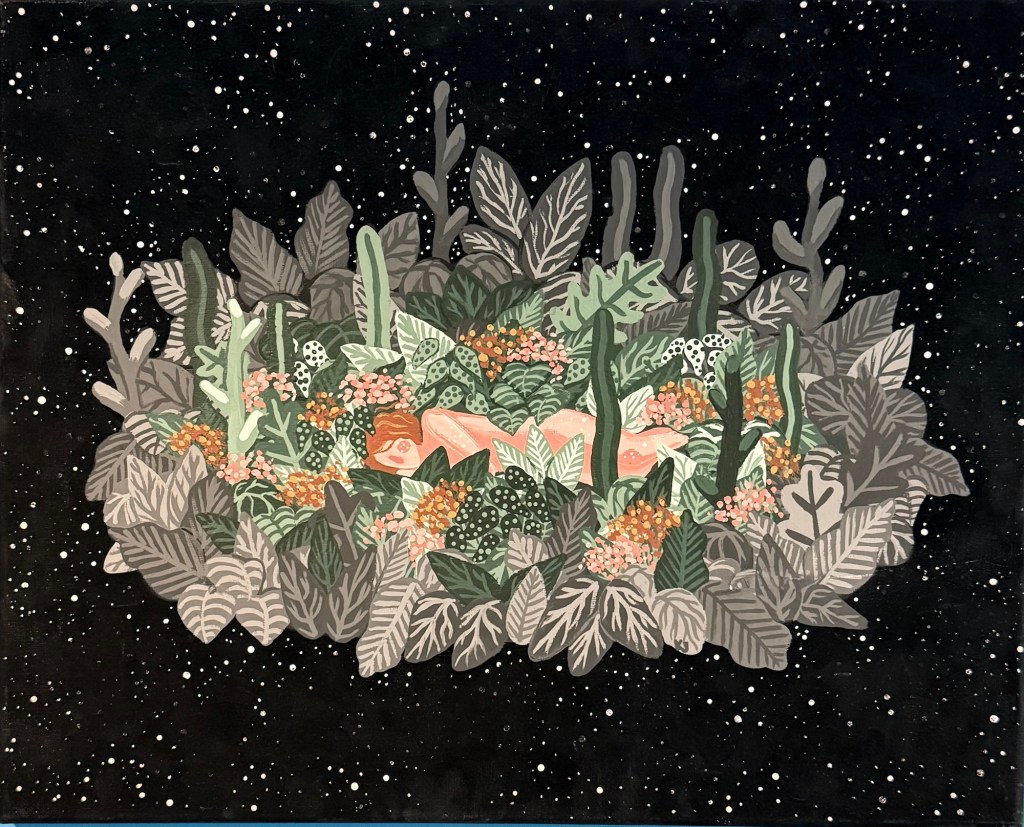
In my experience, and through interactions with other people, I have witnessed fears of inadequacy, abandonment, rejection, and failure take on the shapes of worry, insecurity, judgement, moral superiority, making assumptions, jealousy, blame, control, irritation, defensiveness, people-pleasing, perfectionism, shame, clinginess, withdrawal, embarrassment, and distrust.
I want to add that fear isn’t inherently “bad.” It is a necessary primal emotion. However, if you’ve experienced pain or trauma in social situations or relationships, your mind has used fear to adapt (and survive) by developing ways to scan for potential danger in order to keep you safe (also known as hypervigilance).
An extreme version of this process is known as fear conditioning. This is when the brain learns to associate neutral cues such as a place, tone of voice, facial expression, or situation with danger or pain. Once these associations develop, the body quickly responds, usually before we are even aware it’s happening. (1)
When this happens, the amygdala (the brain’s alarm system that stores memories of fear) scans surroundings for anything that resembles past threats. If/when it detects something, it sends out danger signals automatically, usually bypassing logic. This can trigger fight, flight, freeze, or fawn responses, even if the current situation is actually safe. (2)
Imagine these scenarios:
- You enter a room; someone looks at you and raises their eyebrows.
- Someone who has been previously friendly towards you speaks to the person beside you but avoids looking at you directly.
- When you try to talk in a group, your input is overlooked and ignored.
You could easily imagine how these situations might feel, especially for someone who has experienced significant rejection, criticism, shame, abandonment, or unpredictability from authority figures, parents, friends, or peer groups. (3)
In time, our mind will learn things like, “People aren’t safe.” “If I say anything, I’ll be rejected.” “Being myself isn’t safe.” Or “My boundaries aren’t important.”
As humans we are hard wired for connection while also being hardwired for survival.
So how do we connect while this ‘double mindedness’ exists within us?
I am still learning how to answer this question for myself, and like I’ve said- I am not an expert. I can only give insight through my own research and my own experience.
That being said- How do we connect? We heal and we learn to sit with the hard feelings our fear is trying to cover, which looks different for everyone.
For me healing looks like:
- Having an amazing therapist who holds up a mirror and tells you hard truths.
- Having compassionate and supportive people in my corner that show me healthy love, acceptance, and healthy boundaries.
- Learning and studying about psychology and neuroscience.
- Growing closer with my Creator and deepening my spirituality by learning from spiritual teachers, Christian Mystics, Saints, and scripture.
- Doing more things daily that support my inner peace and support my creativity (writing, art, reading, etc.).
- Holding healthy boundaries with people and situations that are pulling too much from my emotional resources.
- Practicing self-compassion and self-acceptance
We have to allow ourselves to open up to safe enough experiences in order to form new neural pathways and rewire our thoughts to acknowledge that: some people are safe enough, some situations are safe enough, we are safe enough to be ourselves, we can be a safe space for ourselves. (4)
We start small and open up bigger over time. Healing isn’t a linear process, it’s a tapestry of interwoven paths. It’s learning your destructive patterns and recognizing the baggage you carry with you in all of your interactions with people.
One thing you will learn about me is that I love a good quote, so today I will end with some inspiring and insightful words from author, spiritual teacher, and theologian, Caroline Myss, PhD:
“Our lives change externally as we change internally.”
“We are not meant to stay wounded. We are supposed to move through our tragedies and challenges and to help each other move through the many painful episodes of our lives. By remaining stuck in the power of our wounds, we block our own transformation. We overlook the greater gifts inherent in our wounds – the strength to overcome them and the lessons that we are meant to receive through them. Wounds are the means through which we enter the hearts of other people. They are meant to teach us to become compassionate and wise”
Follow your own threads:
1- Learning fears by observing others: the neural systems of social fear transmission – PMC
2- Fear and the Defense Cascade: Clinical Implications and Management – PMC
4- From Fear to Safety and Back: Reversal of Fear in the Human Brain – PMC
Why We Need to Know That All Emotions Stem from Either Love or Fear – Skilled at Life
A few books I recommend on healing (in no particular order):
Women Who Run With the Wolves – Dr. Clarissa Pinkola Estés
Braving the Wilderness – Brené Brown (All books by Brené Brown!)
The Let Them Theory – Mel Robbins
Loving What Is – Byron Katie
CPTSD: From Surviving to Thriving – Pete Walker, M.A. Psychotherapy
Spiritual Books:
Entering the Castle – Caroline Myss
A New Earth – Eckhart Tolle
The Power of Now – Eckhart Tolle
Stillness Speaks – Eckhart Tolle
The Heart of Understanding – Thich Nhat Hanh
The Courage to Be Disliked – Ichiro Kishimi and Fumitake Koga
Christian-based Books:
Falling Upward – Richard Rohr
The Naked Now – Richard Rohr


 Woven In Wonder
Leave a reply to Katie Cancel reply